24 January 2026
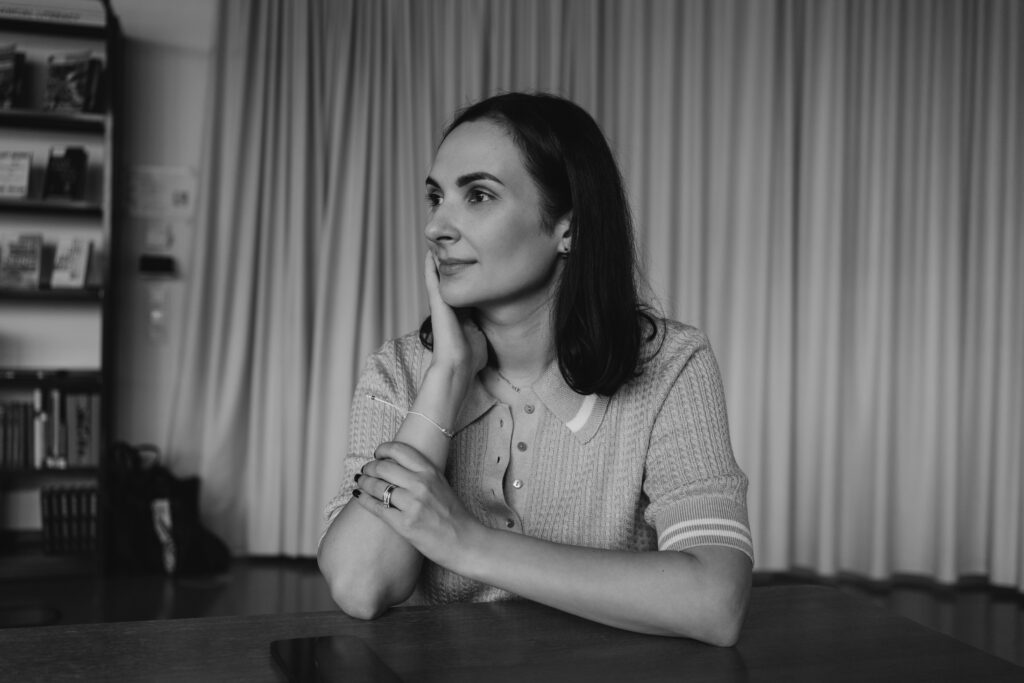
Yana Barinova: “European institutions are increasingly recognizing Ukrainian expertise, creativity, policymaking capacity, and leadership potential”
Behind the HUB is a new interview series that brings forward the vision and reflections of those who shaped the Professional Integration HUB from the very beginning.
The series features the program organisers, Ukrainian women professionals whose work has contributed to civic processes in Ukraine. Alongside our participants, they have also experienced integration firsthand and bring insights shaped by leadership, responsibility, and lived experience.
We open the series with Dr. Yana Barinova, Program Director Ukraine at ERSTE Foundation.
In the interview, Yana speaks about integration as a quiet internal shift and the ability to live and act in the present. She reflects on how philanthropy has changed after 2022, why investing in people creates long-term stability, and how the HUB evolved from emergency response to strategy.
PROFESSIONAL BACKGROUND
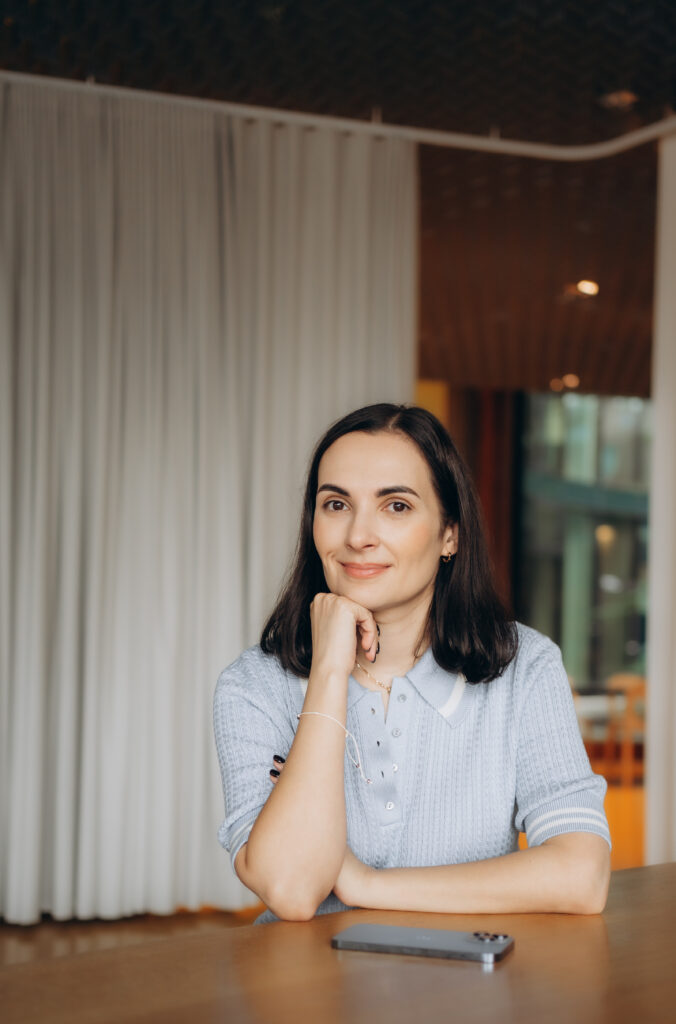
After relocating to Vienna following the start of Russia’s full-scale invasion of Ukraine, Dr. Yana Barinova has served as Program Director Ukraine at ERSTE Foundation since April 2022. Yana is responsible for projects related to Ukraine, including the Professional Integration HUB program.
Prior to this, she held various roles within the Ukrainian government, including Director of the Department of Culture at the Kyiv City State Administration and Advisor to the Ministry of Culture and Information Policy of Ukraine.
She has a doctoral degree in Arts and Science from Sorbonne University and an MBA from Paris Business School. She has also completed leadership programs at the Aspen Institute Ukraine and the Ukrainian School of Political Studies.
From 2015 to 2019, she served as Chief Operating Officer at the Babyn Yar Holocaust Memorial Center. She curated the Cultural Diplomacy in Times of War course at the Central European University and is the author of the book New Media, Memory, Places, as well as numerous publications on cultural policy, memory politics and cultural diplomacy.
She chaired the Working Group on the Nomination of the Chernobyl Exclusion Zone to the UNESCO World Heritage List from 2019 to 2020.
She is an expert in institutional development, stakeholder relationship management, government relations, and philanthropy in Eastern Europe.
PERSONAL STORY AND INTEGRATION
Professional Integration HUB You have many years of experience working in the cultural sector, public administration and reform teams in Ukraine. How has this experience shaped you?
Yana Barinova Working in Ukraine’s cultural and public sectors taught me how to work in dynamic environments, make decisions under pressure and build coalitions between institutions that don’t usually cooperate.
Managing large teams, navigating crises and balancing political, civic and cultural interests has shaped my strategic vision. This experience is an asset in the international philanthropic landscape, as I understand both the realities on the ground in Ukraine and the decision-making processes within European frameworks. I can translate between these worlds.
PH You moved to Austria at the start of the full-scale invasion. What was the biggest challenge?
YB The hardest part was experiencing two emotional realities simultaneously. Physically, I was safe, but mentally, my life was still in Kyiv. Professionally, I had to start again from scratch — a new country, a new system, a new language. It was a time of reinvention, learning to function in a new environment.
PH What does it mean to be integrated into European society?
YB It means standing on your own and contributing meaningfully within a new society.
“You are integrated when you stop living in a temporary scenario and start living your life in the present moment.”
PH Was there a turning point when you felt mentally adapted?
YB There was, but it wasn’t a dramatic moment. It was a quiet shift — almost invisible from the outside — when I realised that I was no longer living in ‘temporary mode’. For a long time after arriving in Austria, everything felt provisional. I worked, I learned and I navigated the new system, but internally it still felt as if I had put my real life in Ukraine on hold. For me, mental adaptation began when I stopped comparing everything to ‘how it used to be’.
PH On a scale of one to ten, how would you rate your level of integration?
YB Probably a 7. I function well professionally and socially and have a broad network. However, integration is an ongoing process involving language, codes, and habits, and I am still learning.
PH Many Ukrainian women face challenges in the Austrian job market. Your path shows resilience and growth. What helped you?
YB What helped me was understanding that I wasn’t starting from zero as a person, only geographically.
PH How can one balance adapting to European standards while preserving Ukrainian identity?
YB Assimilation only becomes a risk when people completely lose their connection to their language, heritage, and community.
“Integration should expand your identity, not replace it.”
THE IDEA OF THE HUB AND THE ROLE OF ERSTE FOUNDATION
PH How do you see philanthropy fitting into Ukraine’s reconstruction?
YB Today, effective philanthropy must be strategic.
The context changed post-2022: humanitarian aid alone cannot address long-term recovery. Ukraine needs institutional development, expertise, and sustainable investment in people and communities. Models that combine resources, knowledge, networks, and co-creation are effective.
PH Why did ERSTE Foundation choose professional development over humanitarian assistance?
YB Because professional integration creates long-term stability. When people gain skills, networks, and access to the labor market, they adapt and contribute.
PH How was the Professional Integration HUB conceived?
YB It emerged as a direct response to what we saw in early 2022: highly qualified Ukrainian professionals who suddenly found themselves in Austria without clear pathways to continue their careers. Clearly, a humanitarian-only approach was insufficient. A platform was needed to connect people with institutions and opportunities.
IMPACT AND EVOLUTION OF THE PROGRAM
PH How would you assess the impact after three rounds?
YB The impact is visible on several levels. The HUB provided Europe with a clearer understanding of Ukrainians as professional and motivated individuals. It also built trust between institutions and individuals. Many participants continued their careers in Austria or pursued new opportunities. Most importantly, it initiated a broader public conversation about integration as a long-term investment.
PH Which of the three rounds’ achievements do you consider the most significant?
YB The community. The relationships built within the HUB remain active far beyond the program, resulting in collaborations and joint initiatives. A strong, self-sustaining community is the best indicator of systemic impact.
PH Do you see potential for the program to continue in a new phase?
YB Absolutely. The next phase must reflect the transition from emergency response to strategy.
“Ukrainians in Europe are doing more than adapting; they are co-creating.”
The HUB can evolve into a space for long-term cooperation, knowledge exchange, and institutional partnerships.

PH Which principles will remain unchanged regardless of the future format?
YB The core principle that remains unchanged is agency. Integration cannot be built on assistance alone. Real integration begins when individuals are trusted with responsibility and given the space to act. It is not a service delivered to people. We are not here to manage integration, but to build cooperation.
PH Through initiatives like the HUB, what do Ukrainians demonstrate to European partners?
YB They brought not only the trauma of war, but also enormous potential: education, culture, and a remarkable capacity for self-organization. Our presence in Europe is not temporary. We must transform our status as a “temporary community” into a long-term resource for shared living.
We embody flexibility, horizontality, intellectual depth, and creative generosity. Ukrainians build communities, support each other, and create spaces of trust — something Europe greatly needs at a time when it is searching for new forms of unity.
PH How is Ukraine’s perception changing among European institutions?
YB It is becoming more mature and multidimensional.
“Ukraine is no longer viewed solely through the lens of conflict or humanitarian need. European institutions are increasingly recognizing Ukrainian expertise, creativity, policymaking capacity, and leadership potential.”
PH What qualities of Ukrainian professionals are most valuable?
YB Resilience, initiative, adaptability, and the ability to quickly learn. Sincerity and authenticity are also valuable qualities, as they form the foundation of social capital. I have always approached new environments with the mindset that no one owes me anything. I came with a proposal: my values, my projects, and my vision.
Trust develops slowly, but every small success contributes to a long-term future. Our social capital contributes to Europe’s evolution toward becoming more open, flexible, and capable of solidarity in times of crisis.
CONCLUSION
PH How do you maintain a balance between responsibility, work, and your personal life?
YB Through rituals and moments of presence, such as art and conversations that nourish rather than exhaust. Time with my family and cooking.
PH What does the HUB mean to you personally?
YB For me, it symbolizes the moment when integration turns into contribution.