16 December 2025
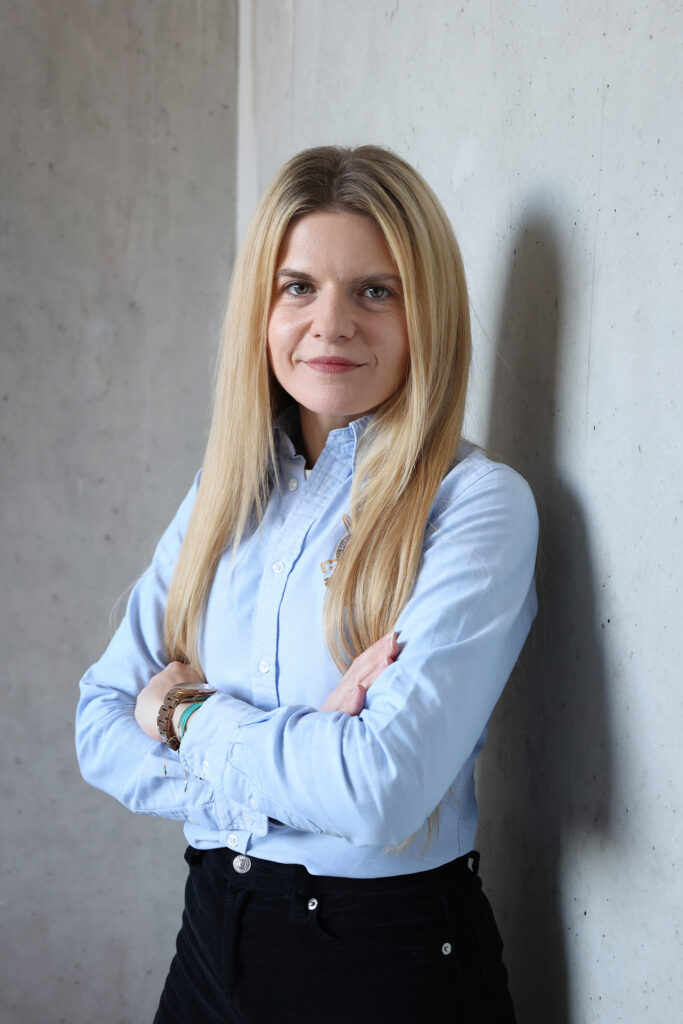
Solomiia Beska: “My competence was recognized and my contribution mattered”
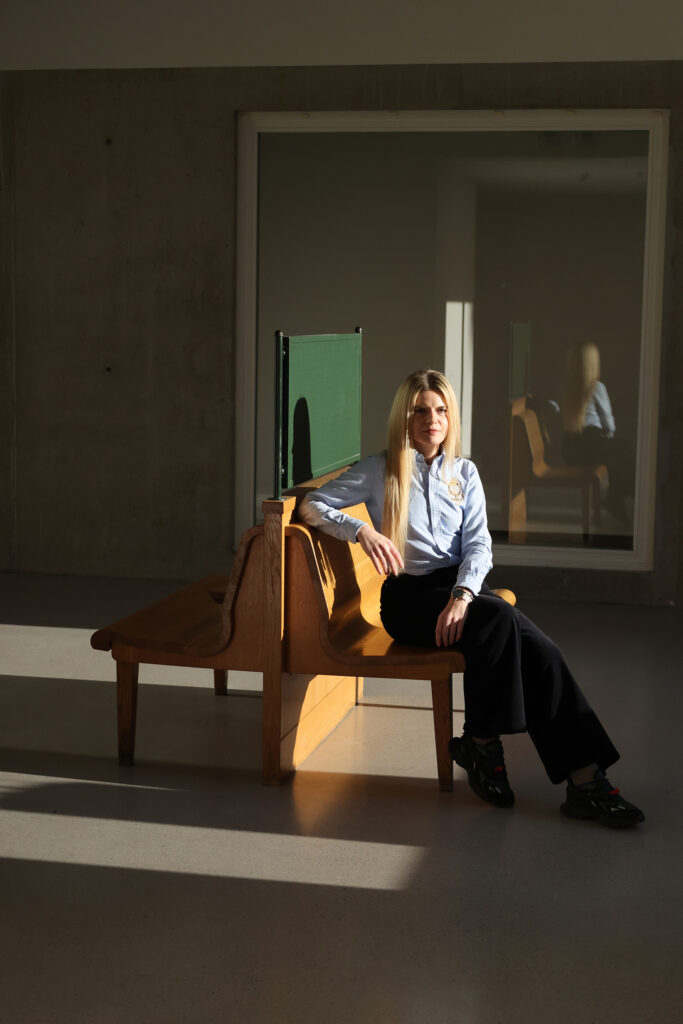
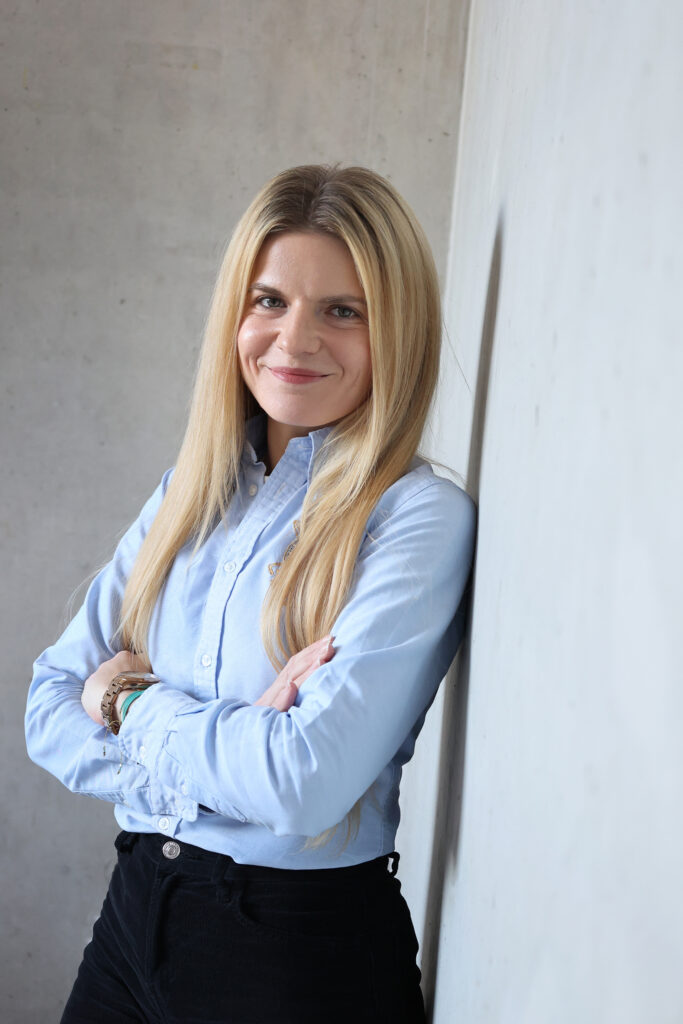
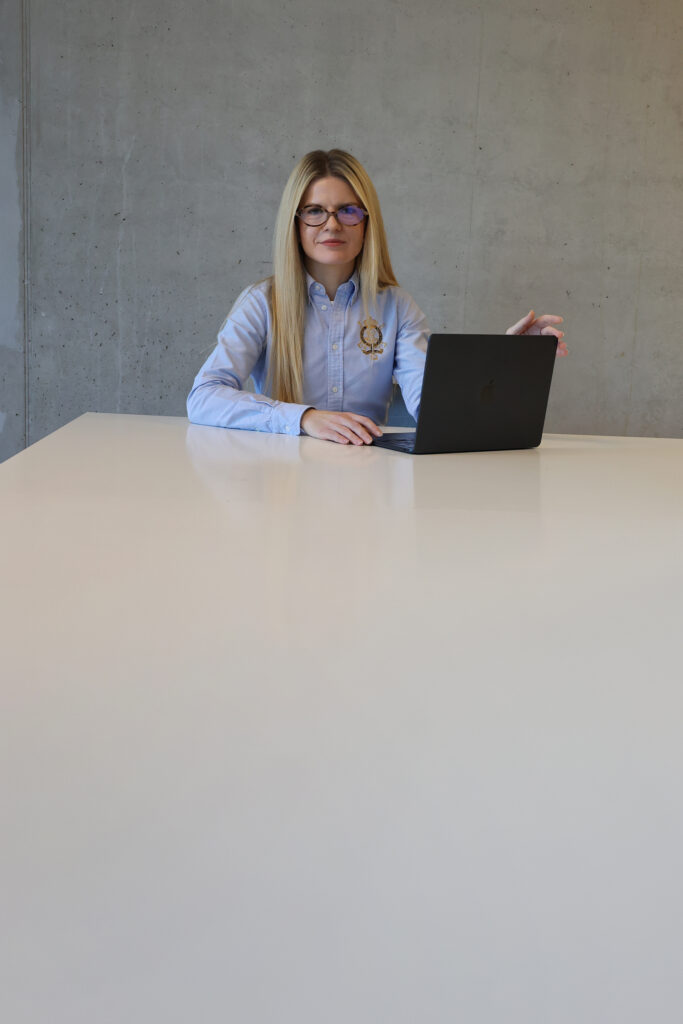
Solomiia Beska, Professional Integration HUB 3.0 Program Participant.
Intro
- Age: 34 years old
- City before moving to Austria: Ternopil, Ukraine
- Professional specialization: Legal Scholar and Cybersecurity Researcher
- Hosting institution: The Federal Ministry of Innovation, Mobility, and Infrastructure of Austria
- Self-rated integration: 7/10
PROFESSIONAL BACKGROUND
I am a legal scholar and cybersecurity researcher specializing in information protection, cyber resilience, and hybrid warfare. My work focuses on how states develop institutional and technological resilience under continuous digital threat and conflict. I combine legal expertise with research in international relations to examine how governance systems adapt under pressure.
I have over 13 years of experience in the legal and public sector in Ukraine. I served as an Assistant Judge in the Criminal Division of the Ternopil Regional Court of Appeal, and later as a Key National Legal Expert at the Ternopil Regional Military Administration.
I am pursuing a PhD in Law at the West Ukrainian National University, where I study the administrative and legal design of cybersecurity systems during wartime.
Internationally, I work in academic mentorship and capacity-building — as a Learning Mentor in the Invisible University for Ukraine (CEU) and as a Mentor in the Her CyberTracks Programme (ITU–UNODC–GIZ), supporting young professionals working at the intersection of cybersecurity, diplomacy, and policy.
HOBBIES AND PERSONAL INTERESTS
I enjoy playing tennis, especially with my daughter, and hiking in the mountains. I love traveling to learn from different cultures and social environments; I have visited more than 27 countries and plan to continue exploring. I am passionate about contemporary art and architectural heritage, and I enjoy discovering cultural meaning through places, symbols, and lived history.
A book that greatly influenced my thinking is The Gates of Europe: A History of Ukraine by Serhii Plokhy, which provides a deep historical perspective on Ukraine’s identity, resilience, and geopolitical role.
Another important work for me is On Freedom by Timothy Snyder,in which Snyder argues that freedom is not merely the absence of restrictions, but the active capacity to participate, act, and build community, a perspective he directly connects to Ukraine’s ongoing struggle for sovereignty.
However, the book closest to my heart is The Story of One Family (2005) by Andriy Klym, my great-grandfather. It is a documentary-literary narrative about several generations of a family from rural Galicia, depicting the struggle for Ukrainian independence, Soviet repression, and the moral strength of rural intellectuals.
This family history shapes my identity and academic work: I am currently developing a research article on the emergence of Ukrainian nationalism and the role of the rural intelligentsia in Galicia between 1845 and 1945, a century marked by war, cultural resilience, and the fight for dignity.
RELOCATION
The key factor that influenced my decision to leave Ukraine was my daughter. We spent a year living through the full-scale war in Ukraine, and I saw how deeply the constant stress, fear, and air raid sirens were affecting her. I wanted to give her safety, stability, and the chance to have a childhood, one defined by curiosity and growth, not by war. Leaving was not an escape from responsibility; it was an act of protection and love.
I arrived in Austria in 2023 with my daughter. Austria was the first and only country we moved to after the full-scale invasion. I chose Austria because it offered a balance of safety, strong social systems, and educational opportunities for children. We settled in a small town in Upper Austria, where I felt my daughter could experience calm and stability after everything she had lived through.
PROFESSIONAL PATH IN AUSTRIA
The first months were a period of rebuilding. Although I had over 13 years of professional legal experience in Ukraine, without German I had to start from the very beginning. I worked simple jobs in restaurants and cleaning to support my family. But I never paused my professional path. In the evenings I volunteered as a mentor at the Invisible University for Ukraine (CEU), and I continuously applied to universities and research programs. Step by step, I worked toward returning to my field, guided by Churchill’s words: “To improve is to change; to be perfect is to change often.” For more than a year, I applied to universities across Europe and the United States with my research project on Ukraine.
One day, while I was working a cleaning shift, I received an email informing me that I had been awarded a €22,000 scholarship to pursue my Master’s degree at Central European University. This became a turning point. I completed my Master’s degree with Merit, defending my thesis on Ukraine’s cyber resilience. All my academic work during my studies was dedicated to Ukraine, its resilience, its future, its voice in the world.
Another meaningful milestone was being selected for the Professional Integration HUB. Before joining the Program, my professional path in Austria had two parallel dimensions.
On the one hand, as many displaced professionals, I initially worked outside my field — in the service sector — while adapting to a new environment and supporting my daughter. This period taught me resilience, discipline, and the importance of staying committed to long-term goals even under challenging circumstances.
On the other hand, I never stepped away from my academic and professional identity. I continued my research and intellectual work, which eventually led to my current position as a Research Fellow at the Democracy Institute of Central European University, where I work within the Rule of Law research group.
In 2025, I launched a new research project titled “Invisible Actors in Cyberspace: Civic Cyber Mobilization and Strategic Resilience in Hybrid Warfare,” supported by a research grant from the Central European University Foundation of Budapest. This project examines the IT Army of Ukraine as an example of civic cyber mobilization, analyzing its legal status, integration into national cyber defense, and the gaps in international law regarding non-state cyber actors.
The findings respond to the challenges highlighted in the 2025 EU Strategic Foresight Report – Resilience 2.0, particularly the increasing pressure on democratic systems from disinformation, cyber espionage, and foreign information manipulation. In this context, Ukraine represents a unique global laboratory of resilience, and my work contributes to bringing this knowledge into European and international policy discussions.
In Ukraine, especially during the war, cybersecurity governance and legal protection of information are extremely dynamic and reactive — institutions evolve quickly in response to new threats. The atmosphere is urgent, innovative, and shaped by necessity.
In Austria, the approach is more structured, stable, and regulated. Processes are longer and more predictable, but sometimes less flexible. For me, this contrast creates a valuable professional bridge: I can bring the experience of crisis-driven resilience from Ukraine into the more strategic and systematic frameworks of the EU context.
There is a high demand for specialists in IT, cybersecurity, data protection, and digital governance, especially as Austria and the EU expand their focus on digital resilience and strategic autonomy.
Among Ukrainians, those who combine technical skills with policy understanding, cross-cultural communication, and adaptability are particularly valued. There is also growing interest in experts who can engage in Eastern European security, reconstruction, and Ukraine-oriented projects,areas where Ukrainian professionals have irreplaceable experience and insight.
EXPERIENCE IN THE PROGRAM
I first learned about the Professional Integration HUB program from my sister, who participated in HUB 2.0 and spoke very highly of its supportive environment and professional opportunities. Her experience made me realize that the HUB is not just about employment, it is about restoring one’s professional identity, dignity, and direction in a new country.
I had applied once before, in the previous year. At that time, I was still at the beginning of my integration path improving my German and rebuilding my professional foundation. Over the year, I worked consistently on strengthening my academic profile, volunteering, mentoring, and learning. Applying again felt like a meaningful step, and being selected this year was a confirmation that persistence matters.
I hoped that the program would allow me to re-enter my professional field, but I did not take selection for granted. I knew how competitive the process was. My expectation was simple: to have a real chance to contribute, not just observe. The HUB exceeded these expectations, it placed me exactly where my expertise could be valuable and respected.
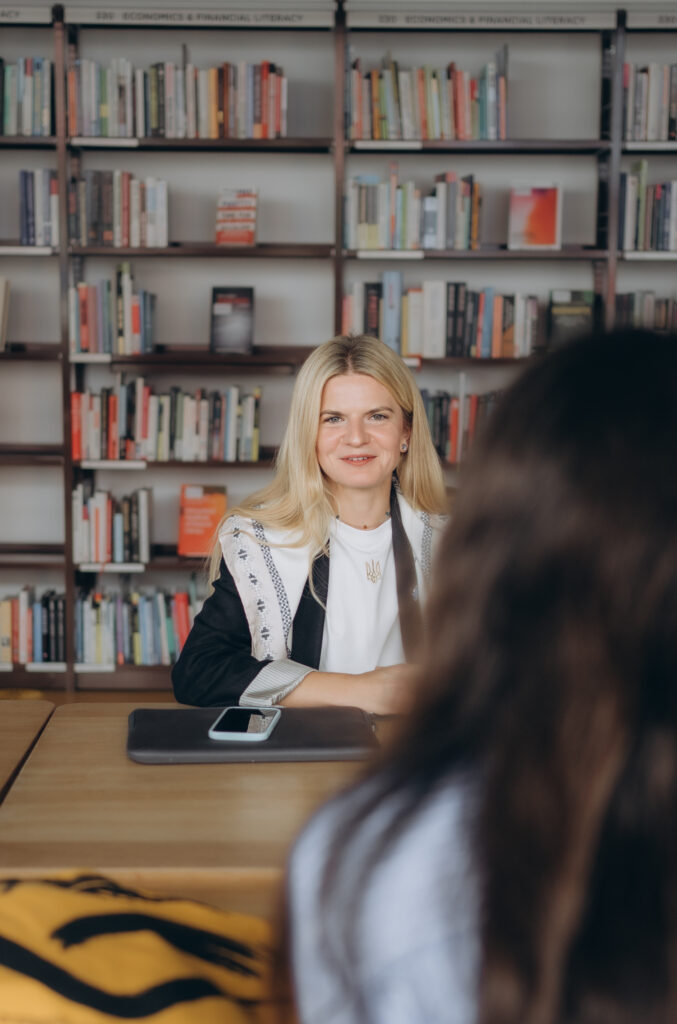
On my first day at the Federal Ministry for Innovation, Mobility and Infrastructure Section III – Innovation and Technology, Task Force EU Innovation and Technology, I felt calm and focused. I was greeted as a colleague, not as “someone who needs help.” The team’s collaborative working culture — open weekly meetings, shared discussions, horizontal communication — made a strong impression on me. It felt like stepping into a space where expertise and initiative truly matter.
The most valuable insight for me was understanding the difference between “being present” and “belonging.” Belonging happens when your work has meaning and when your voice shapes the outcome. I learned that integration is not about adapting yourself to fit the environment, it is about bringing your experience, your story, and your intellectual contribution into it.
My main achievement during the three months of the program was successfully carrying out a multi-layered policy analysis comparing Horizon Europe (2021–2027) with the draft framework for FP10 (2028–2034), highlighting the structural shift toward mission-oriented competitiveness. This work contributed to the Ministry’s strategic positioning within EU research and innovation policy discussions. Additionally, I developed a methodological plan for a comparative analysis of EU Member States’ deployment of financial mechanisms under the Competitiveness Compass, a project with long-term relevance for Austrian innovation governance.
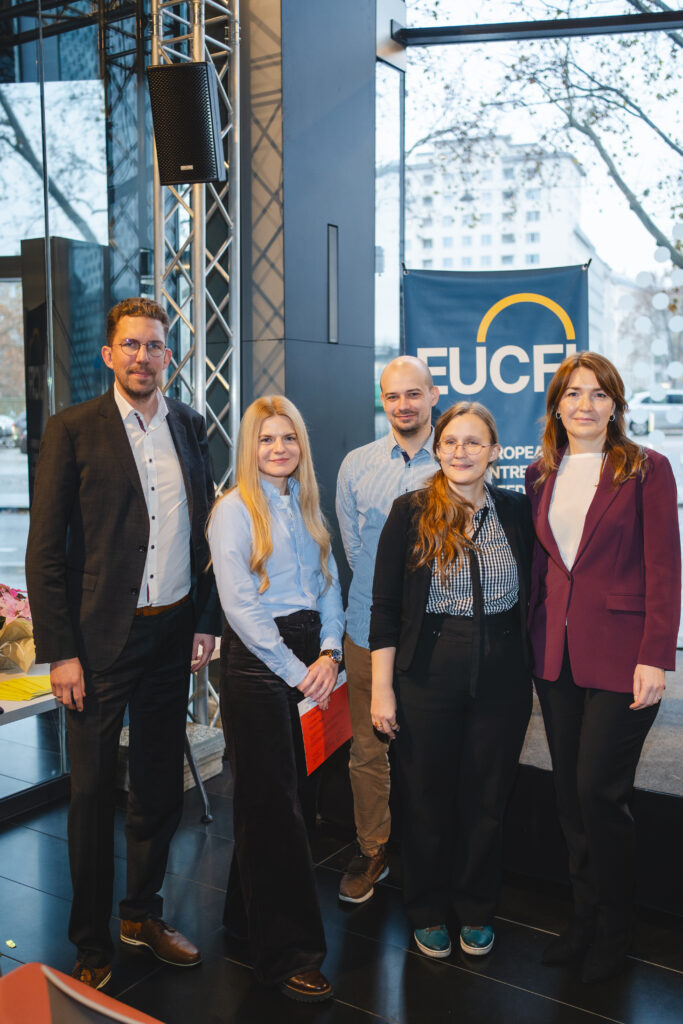
I contributed analytical research, comparative policy review, and structured methodology proposals that supported ongoing strategic policy planning. I brought a perspective shaped by Ukraine’s experience of resilience-building under crisis, demonstrating how adaptability, innovation, and strategic coordination can emerge under pressure. This perspective was valued within discussions on European competitiveness and strategic autonomy.
I felt like a part of the team during our weekly Tuesday meetings. Everyone, regardless of position, shared goals, challenges, and reflections. The openness to dialogue and collective problem-solving created a work culture where every voice had value. That was the moment I understood that I was not simply “doing an internship”, I was contributing to real policy thinking.
The moment I received the assignment to develop a long-term analytical framework for comparing EU Member States’ financing and deployment strategies stands out most in my memory. It was a sign of trust, a clear message that my competence was recognized and my contribution mattered.
The HUB restored continuity in my professional life. It helped me not only return to my field, but return as myself, with my expertise, confidence, and sense of direction. It gave me community, professional recognition, and a framework for growth. Most importantly, it showed my daughter that rebuilding is possible, step by step, with dignity and purpose.
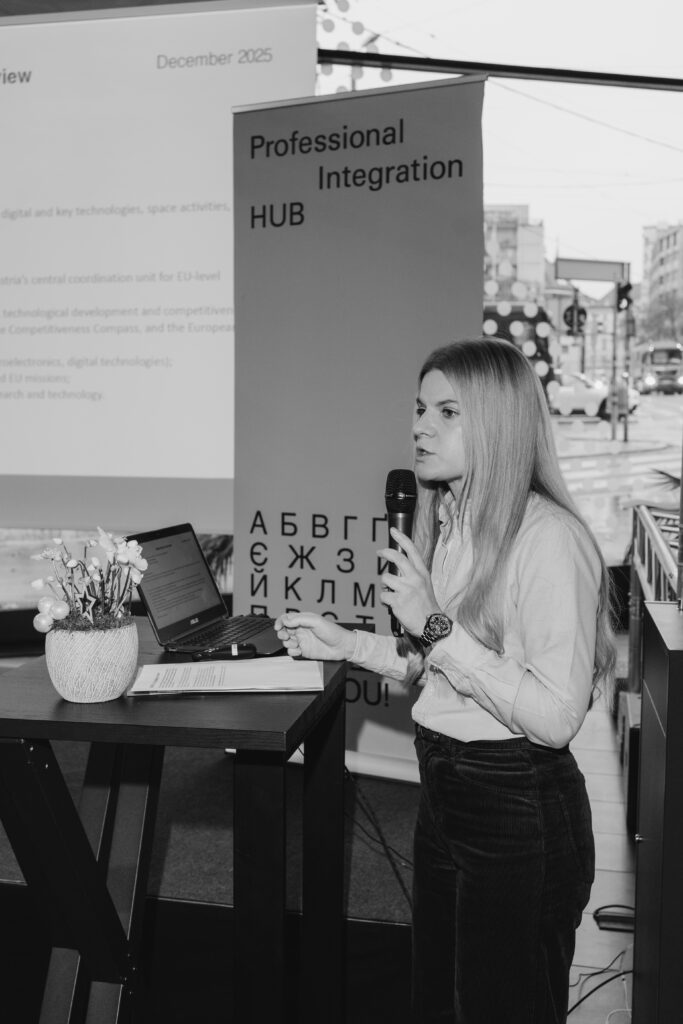
INTEGRATION IN AUSTRIA
I would rate my current level of integration as 7 out of 10. I have established a stable everyday life here: my daughter attends school, I continue my academic work, and I am professionally connected to Austrian institutions. At the same time, integration is a process that takes time. Language, cultural nuances, institutional systems, each of these requires gradual immersion.
For me, integration means belonging without losing one’s identity. A person is integrated not when they simply adapt, but when they can participate in the professional, cultural, and social life of the country as themselves — contributing their knowledge, experience, and values. Integration happens when you no longer feel that you are only “a guest,” but a participant in shaping your environment and future.
I have taken several concrete steps toward integration:
- learning German and continuing to improve it consistently,
- participating in academic and policy projects,
- mentoring and volunteering for Ukrainian students and young professionals,
- actively applying for research programs, universities, and internships,
- building a professional network in Austria and the EU,
- participating in cultural and community events.
The most effective step has been professional participation: returning to my field as a Research Fellow and completing an internship at the Federal Ministry for Innovation, Mobility and Technology (BMK). Professional recognition creates not only economic stability, but a sense of identity, dignity, and belonging.
After the HUB, integration stopped being a process of “adjustment” and became a process of real contribution. I no longer feel like I am standing at the doorway of my profession, I am inside it.
The HUB helped me build confidence, expand my network, and see myself not as someone who is rebuilding from zero, but as a specialist whose experience is needed and valued in Austria. It shifted the narrative from “starting over” to continuing my path.
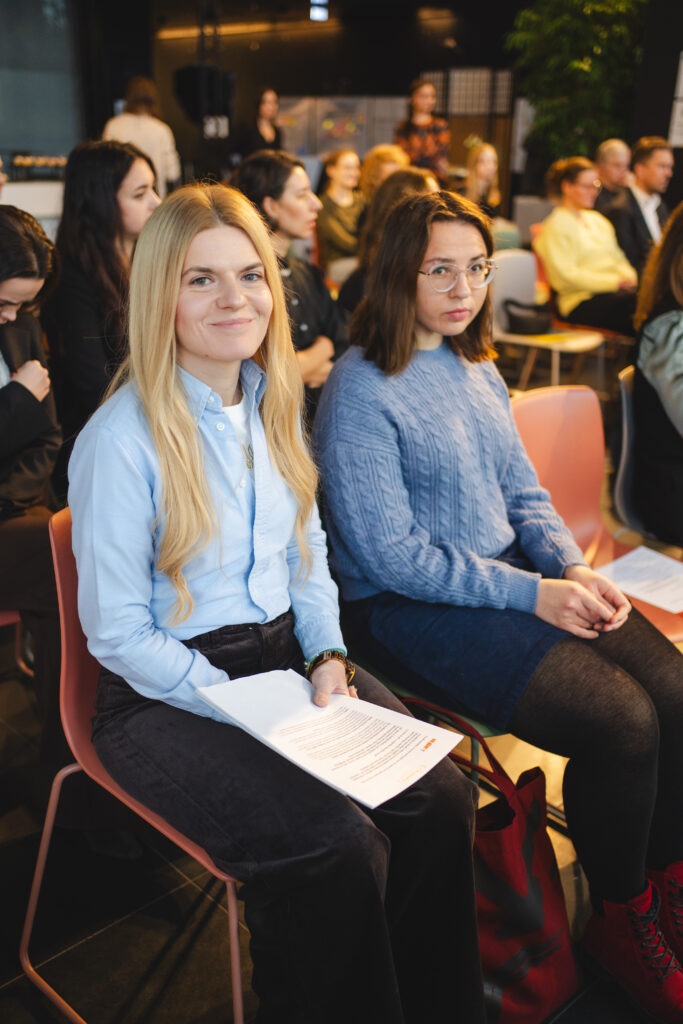
In my experience, Austrians treat Ukrainians with empathy and respect, especially when they see resilience and a willingness to contribute. I remember one conversation with a colleague who said: “What I admire about Ukrainians is that they do not ask to be saved, they ask to be given a chance.” This recognition of agency rather than victimhood, meant a lot to me.
The most common stereotype is that Ukraine is primarily “a country of war.” It is true that war shapes us now, but Ukraine is also a country of innovation, cultural creativity, intellectual strength, and a deep historic tradition of freedom. I try to counter this stereotype not through arguments, but through my work by showing that Ukrainian experience contains not only trauma, but also resilience, competence, and strategic vision.
PERSPECTIVE
After completing the program, I see my path as one of continuing professional and intellectual growth, while remaining connected to Ukraine and contributing to its future.
My “must-do” list includes:
- Complete my PhD on cybersecurity governance and resilience in hybrid warfare.
- Publish my academic research on civic cyber mobilization and the role of digital society in national defense.
- Strengthen cooperation between Austrian and Ukrainian institutions in the fields of innovation, cybersecurity, and democratic resilience.
- Create opportunities for young Ukrainians — mentorship, internships, research support — so that they do not feel alone as they build their futures.
For me, this is not just career development, it is a long-term mission.
On a scale from 1 to 10, how likely I am to return to Ukraine in the future? I would say about 9 out of 10. Ukraine is my home, my identity, my intellectual and emotional foundation. I am here now because of safety, but my long-term direction is inseparable from Ukraine’s future.
I will return when my daughter can grow up safely, without constant threat of missile attacks,
and when I can contribute to rebuilding institutions, digital infrastructure, and resilience strategies in a meaningful way. I do not need ideal conditions; I need conditions where work has purpose and future.
The Ukrainian government should focus on rebuilding institutional trust through transparent decision-making and genuine justice reform. It is also essential to create professional opportunities, programs for returning specialists, research funding, and strong innovation ecosystems. Support for families matters as well: access to quality education, healthcare, and psychological support for children affected by the war. Finally, Ukraine needs stable long-term reconstruction strategies, not only emergency responses. People are more likely to return when they see that their expertise is valued and that they can apply it meaningfully at home.

My dream job is a role at the intersection of cybersecurity policy, research, and international cooperation where I can directly contribute to strengthening digital resilience and democratic security. I see myself working in an international or national institution that values critical thinking, strategic responsibility, and collaboration.
The most important aspects for me are:
- a team built on respect, shared purpose, and curiosity,
- the ability to mentor and develop others,
- and the opportunity to create long-term impact, especially for Ukraine.
My career goal is not just a position. It is the ability to shape systems that protect freedom, resilience, and dignity.
REFLECTIONS
The most challenging moment was the emotional transition from being a respected professional in Ukraine to starting again from the very beginning in Austria. It was not the work itself that was difficult, but the internal dialogue — to remain confident in who I am, even when my circumstances temporarily did not reflect my experience or qualifications. This period taught me endurance, patience, and the importance of holding on to one’s identity, regardless of external conditions.
What is still missing in Austria is a long-term system of professional recognition and integration, especially for specialists in academic, legal, and strategic fields. Many Ukrainians come not only with skills but with expertise — and this expertise needs structured pathways to be recognized and utilized. There is also a need for more platforms for collaboration, where Ukrainian and Austrian professionals can work together on shared research, innovation, and policy projects — not only as “integration,” but as co-creation.
My advice to those who are just beginning their professional path in Austria: do not measure your value by your first job here, your starting point does not define who you are. Move step by step, but steadily. Invest in your knowledge, improve your language skills, and stay connected to professional communities; don’t be afraid to speak about your expertise. Most importantly, don’t let your temporary situation obscure your long-term direction.
The Professional Integration HUB is not just a program, it is a bridge back to yourself, your profession, and your confidence.
Photos: Valerie Loudon, Ganna Kasych