
17 December 2025
Nadiia Chervinska: “I feel that I could contribute in ways that are relevant both to Austria and to Ukraine”
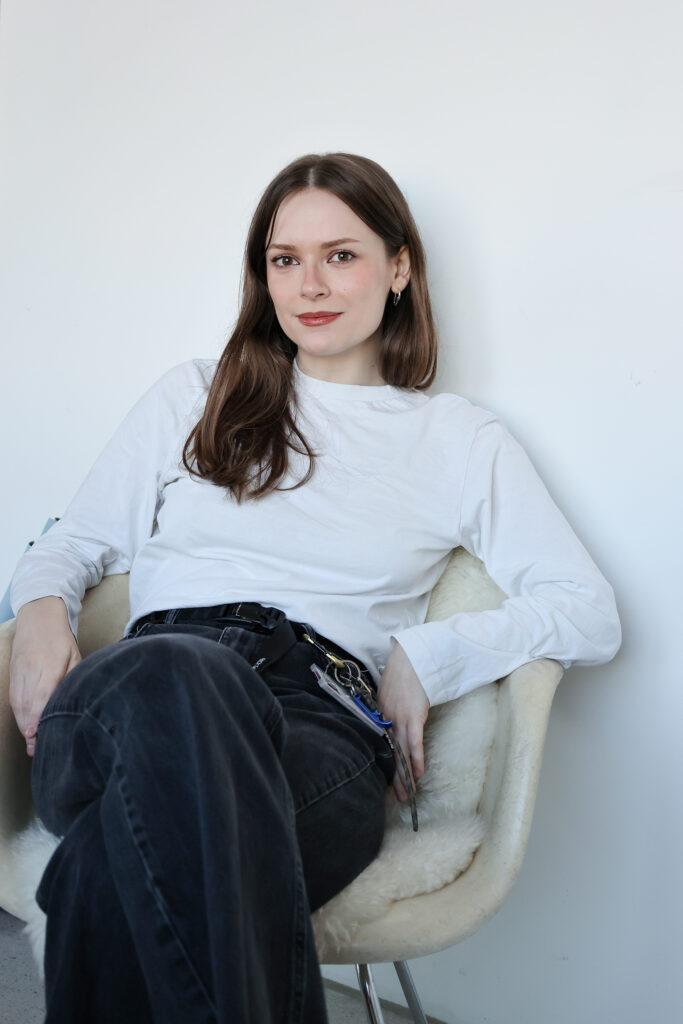
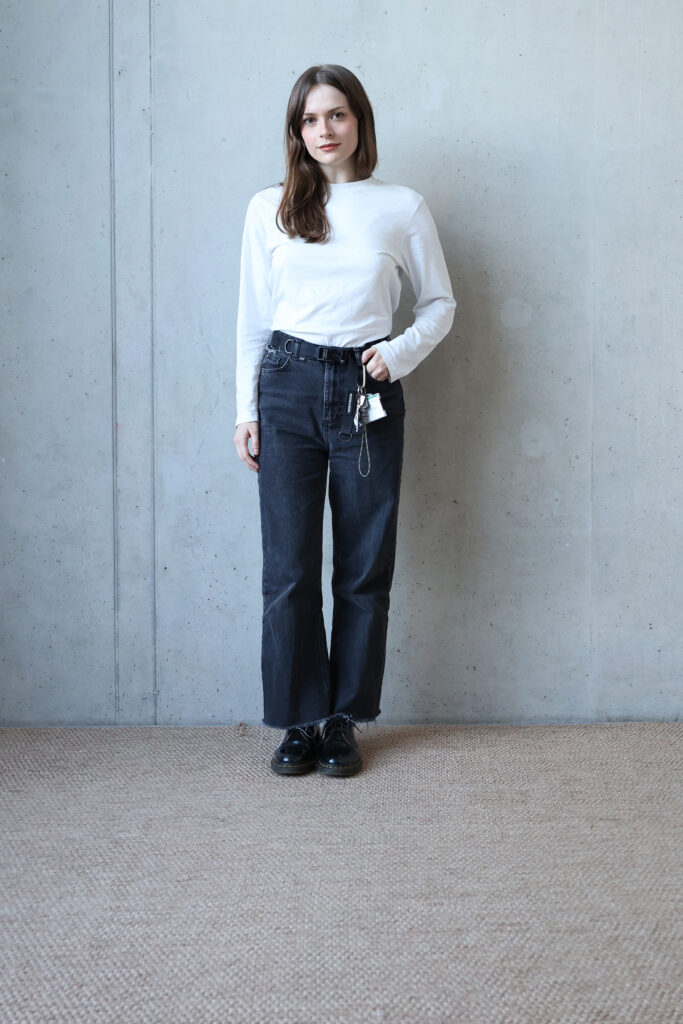
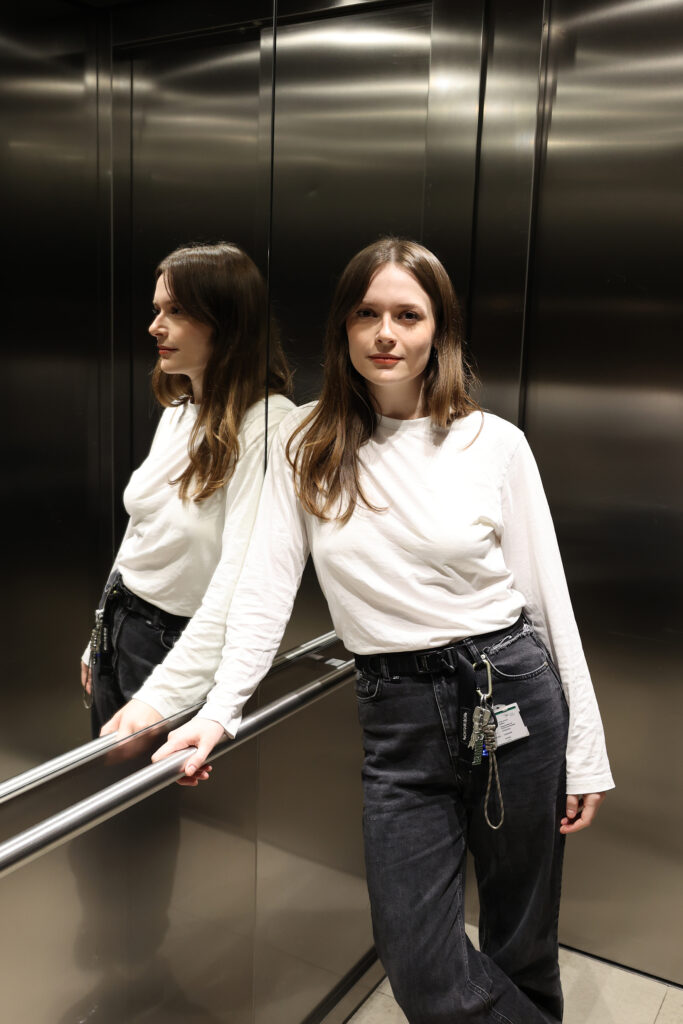
Nadiia Chervinska, Professional Integration HUB 3.0 Program Participant.
Intro
- Age: 29 years old
- City in Ukraine where you lived before the forced relocation: Kyiv, Ukraine
- Professional specialization: Researcher
- Hosting organization: Impact Hub Vienna
- Self-rated integration: 6/10
PROFESSIONAL BACKGROUND
BA and MA in Philosophy at Kyiv-Mohyla Academy, MA in Comparative History at Central European University. I served as an assistant curator at the National Art and Culture Museum Mystetskyi Arsenal and as Editor-in-Chief of Osnovy Publishing and Saliut, a magazine on contemporary Ukrainian photography. As a Researcher, I work with philosophy and intellectual history, with a particular focus on feminist cultural and political thought. My current project explores feminist and nationalist discourses in post-Soviet Ukraine.
HOBBIES AND PERSONAL INTERESTS
In my free time, I like to stay active and I usually go running or to the gym, and I also enjoy listening to jazz music, as it helps me disconnect and recharge.
One of the most meaningful books for me is Martin Buber’s I and Thou.
RELOCATION
The main reason to leave Ukraine was growing uncertainty about the future. I stayed in Kyiv for the first two years after the full-scale invasion, but it became increasingly difficult to stay mentally stable and focus on my research with air raid alarms, electricity cuts, and missile attacks in the background. At some point, I realized that leaving would allow me to stay productive and useful rather than just trying to survive day by day. I wanted to continue contributing to Ukrainian academic and cultural life, even from abroad, and to be part of initiatives that support Ukrainian scholars and students in this difficult period.
I arrived to Vienna to start my MA. The city has always been an important intellectual and historical space for Central and Eastern Europe, so it also felt like a natural continuation of my academic path and a meaningful opportunity to continue my work. Coming here allowed me to feel that I was still doing something important and that my work could, even indirectly, contribute to Ukraine’s visibility abroad.
The first months were intense, as I had to adapt to a new environment and continue my studies and professional work at the same time. I became involved in several academic projects and collaborated with colleagues on initiatives supporting Ukrainian students and scholar. That period helped me build new connections and find a sense of stability.
PROFESSIONAL PATH IN AUSTRIA
From the moment I arrived in Vienna, I remained professionally active rather than pausing to “look for a job” in the conventional sense. I engaged in several collaborative projects and institutional programmes right away. It was a continuous process of integration.
In Ukraine, I was part of an active academic and cultural community, so collaborations and projects came quite naturally. In Austria, I didn’t have any professional connections and didn’t really understand how the field works here. It took some time to understand how decisions are made and what kinds of initiatives are actually valued. Here things move a bit slower, but they’re also more stable and predictable. Over time, I started to see these differences as complementary.
EXPERIENCE IN THE PROGRAM
The most valuable insight I gained during the program was realizing how much meaningful impact can be made through good community initiatives and consistent actions that connect people. I also learned to think more strategically about how educational and social projects can be adapted to different contexts without losing their meaning.
In my role, I was working on researching educational innovation and identifying how new approaches to teaching and learning are being implemented. My main achievement was creating a structured overview of these developments and connecting them to Education Lab’s activities. This included analyzing how digital tools, community initiatives, and alternative educational models can be used to make learning more adaptive and inclusive.
For me, the main value of the HUB was the atmosphere of openness and exchange where people can share experiences and approaches to education and social change. Being surrounded by that diversity of thoughts helped me see my own experiences in a different light.
My main expectation was to learn how community-oriented organizations function on a daily basis and turn ideas into concrete projects. I was also curious to see how I could contribute with my own background in research and education, and how that could be translated into something practical and socially meaningful at the same time.
INTEGRATION IN AUSTRIA
I would probably rate my level of integration in Austria around a 6 out of 10. I feel comfortable living and working here, I’ve built a professional network and I understand how most systems function. At the same time, I’m aware that integration is an ongoing process and that it takes time to fully understand social nuances and feel at home in a new country.
For me, integration is not about assimilation or losing my background but about being able to participate fully professionally, socially, and culturally but also maintain my own identity. A person is truly integrated when they can live their daily life with ease, contribute to their community, and feel that their presence and work are valued.
I’ve taken several steps to integrate. Professionally, I participated in academic and community projects that connect scholars and educators. I also attend educational events and public lectures to better understand local perspectives. Networking through collaborative projects was probably the most effective for me because it’s how I built long-term professional relationships and better understood the academic environment in Vienna.
The program gave me a stronger sense of confidence in professional spaces outside academia. It also helped me better understand how Austrian organizations approach social and educational innovation, and also made me feel more connected to local initiatives. After the program, I started to see more opportunities for collaboration and felt that I could contribute in ways that are relevant both to Austria and to Ukraine.
PERSPECTIVE
Ukraine is my home, and I would like to contribute to rebuilding and strengthening its academic and cultural institutions once the situation becomes more stable and sustainable, but I’m not ready to say for sure. It would depend greatly on both personal and structural factors.
I would consider returning when there is a clearer sense of long-term security and when professional opportunities allow for meaningful academic work. For me, it’s not only about safety but also about being able to contribute effectively: to teach, research, and participate in rebuilding the intellectual and educational infrastructure. I would also look for stronger institutional support for researchers and educators.
I think the most important step is to create the conditions for professional stability that includes transparent institutions and support for education, science, and culture. Many people abroad would like to return, but they need to see that their skills and experience will be valued and that they can work in an environment where long-term planning is possible. The government could also strengthen programs that connect the diaspora and those who stayed through research collaborations or academic mobility schemes so that returning feels like a continuation rather than starting from zero.
REFLECTIONS
In my view, what’s still missing in Austria is continuity, as many initiatives supporting Ukrainians are short-term or project-based. There is a strong initial effort to help people integrate, but far fewer long-term programs that focus on professional growth and sustained development. I believe it would be especially valuable to have more structured mentorship and collaboration opportunities that connect Ukrainian professionals with Austrian institutions in a lasting, stable way.
I would describe the Professional Integration HUB as a space that helps people connect with others and translate their experience into something relevant in a new environment.
Photos: Valerie Loudon, Ganna Kasych