17 December 2025
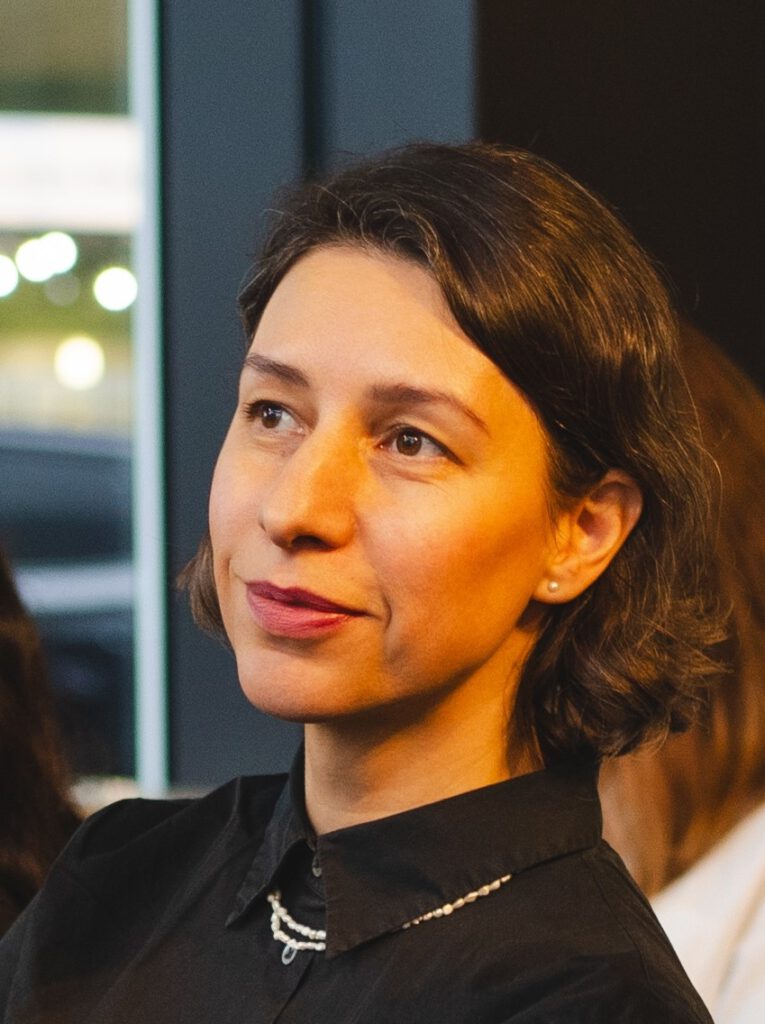
Anna Gaidai: “I find networking and connecting with people to be the most effective for integration”
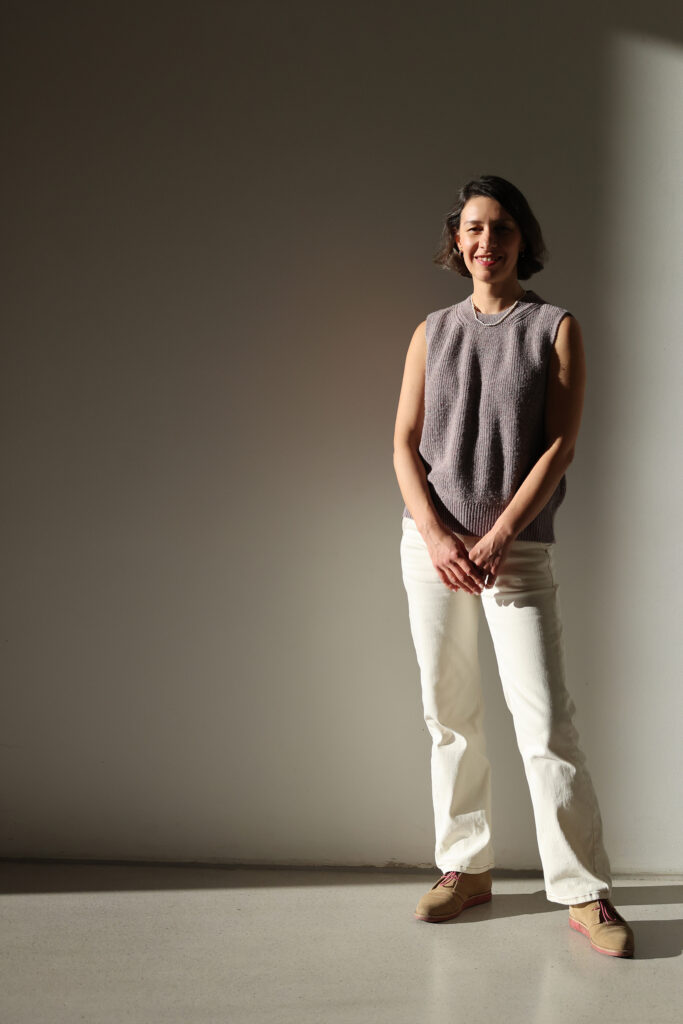
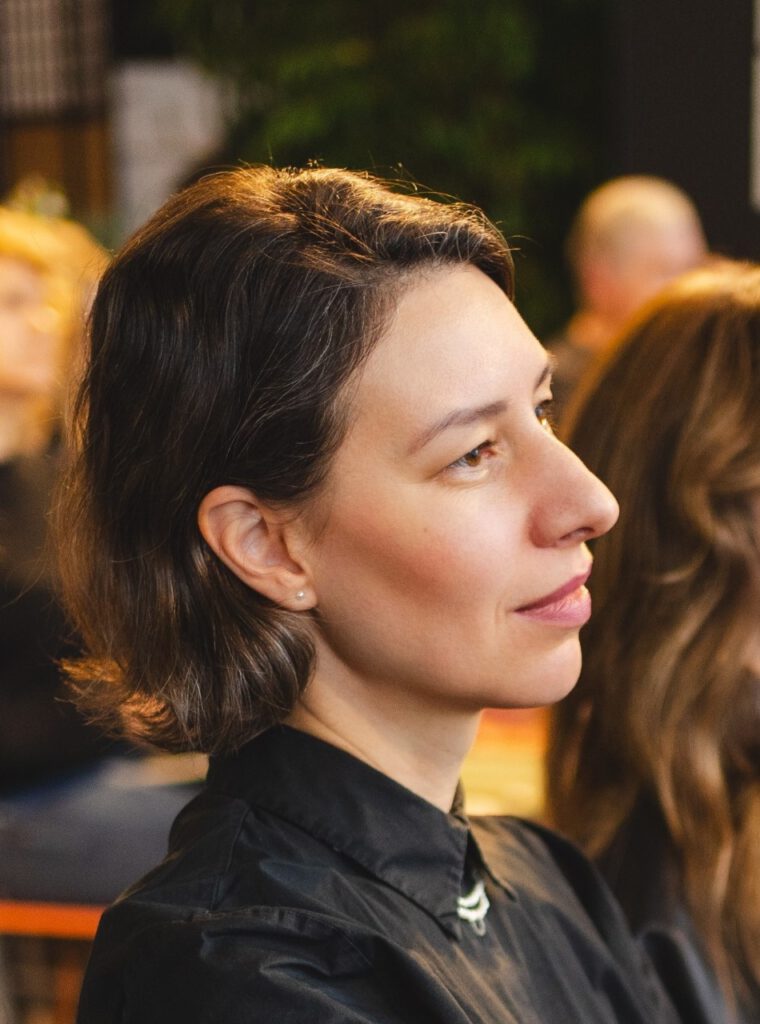
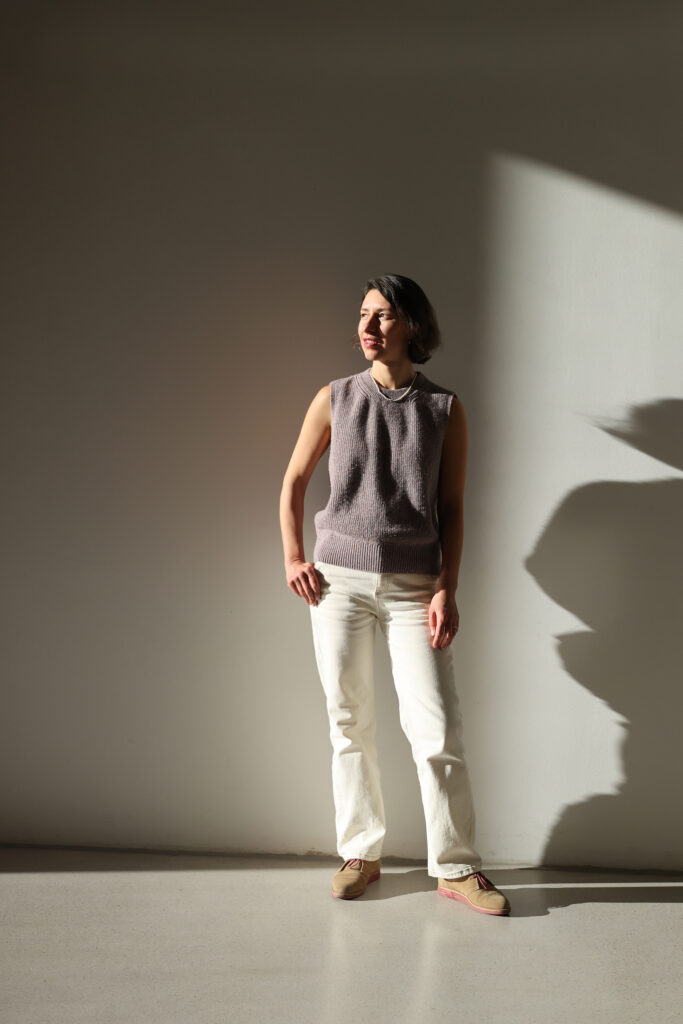
Anna Gaidai, Professional Integration HUB 3.0 Program Participant.
Intro
- Age: 43 years old
- City in Ukraine where you lived before the forced relocation: Lviv/Kyiv
- Specialization: Curator and Art Projects Manager
- Hosting organization: Atelierhaus Salzamt, Stadt Linz
- Self-rated integration: 7/10
PROFESSIONAL BACKGROUND
- Curator of community art program and visual arts project manager at Jam Factory Art Center (Lviv, Ukraine) and Curator of artist-in-residence at Magic Carpets International Platform (Creative Europe), 2020-2024.
- Jury member of Open Call Artist in War (Jam Factory Art Center, Ukraine 2022).
- Co-curator of Superorganism International Exhibition, Tartu Capital of Culture 2024 (Tartu, Estonia).
- Co-author of Policy Brief Visual Culture and Photography: Developing a Balanced Ecosystem in Ukraine (Kyiv, 2017) and Handbook How We Stay Together (Lviv, 2023).
- Co-curator of a CEC ArtsLink Assembly dedicated to brain drain of the Ukrainian cultural community caused by war (Warsaw, 2022).
- Co-founder and curator of the NGO PhotoCULT Cultural Center (Kyiv, Ukraine, 2011-2016) and Invited Reviewer of the International Portfolio Reviews at European Photo Festivals (Vienna, Kaunas, Bratislava, 2013-2014).
- Co-organizer and curator of numerous exhibitions (Kyiv, Chernihiv, Lviv, Dnipro, Munich), festivals of Czech and Lithuanian photography, International Visual Culture Festival Vizii (Kyiv, 2013), International Portfolio-Review (Chernihiv, Kyiv), International Festival ChernihivPhotoFest (2011).
- Curator of the exhibition of mail art and art-book Open Letter. Naked Emotions (Kyiv, 2016).
- Associate of the EU-Eastern Partnership Program “Culture and Creativity” for cultural leaders (Kyiv, 2016-2017).
HOBBIES AND PERSONAL INTERESTS
My circle of interests includes community art, participatory practices, design, yoga, singing, contemporary dance.
To Kill a Mockingbird by Harper Lee is a meaningful book to me because it taught me about empathy and standing up for what is right.
RELOCATION
The danger of missile attacks and the danger of occupation by russian troops was the key factor that influenced my decision to leave Ukraine.
My family came to Krems an der Donau in Austria, because my friend and his family invited us to host in Krems. During the trip to Austria we spent a night in Bratislava, where a friend of our Austrian friend lives. My Austrian friend’s family and friends supported us with basic things – flat, furniture, registrations with authorities, translation etc.
During my first months in Austria at the beginning of the full-scale russian war in Ukraine my ex-colleagues from Jam Factory Art Center and I started an emergency support project Artists In War. The aim of this project was to give financial support to Ukrainian artists, who stayed in Ukraine and would like to come back to their professional activity. We fundraised the money, considered applications and organized contracts and communication.
At this period of time my family remained under the occupation of russian soldiers in Kyiv district of Ukraine. Communication with them was very rare. They were forced to spend almost all their time in the basement of the house, without heating. The stress was overwhelming.
I did not fully understand how long we would stay in Austria; I thought the war would end soon and that we might be able to go back home in a few months. For this reason, I did not search for a job in Austria at that time, but I met some art professionals recommended by my friends. Mainly, I started building connections with Ukrainians in Krems and Vienna and learned the German language. I was also invited to an international project aimed at bringing together Ukrainian professionals in art and culture, both in Ukraine and abroad. In addition, I continued volunteering to support people in Ukraine.
PROFESSIONAL PATH IN AUSTRIA
I have been looking for a job in Austria almost all the time since I have been here, but I started actively in Spring 2025.
I did not have any work experience in Austria before joining the program. My professional journey in Austria began at the moment when I started my Internship at Atelierhaus Salzamt, a contemporary art institution of the Art and Culture department of Linz City. I applied to the Professional Integration HUB 3.0 Program. My Portfolio was selected and matched great with the job position at Salzamt, so I started to work in September 2025.
As for the main differences, perhaps the biggest is that during a full-scale war in Ukraine, the themes of most projects are related to the war, its impact and losses, or russia’s colonial policy. In contrast, in Austria, the topics mostly focus on age-related issues, gender, COVID-19, migration, women’s rights, and other social subjects.
Art professionals in Austria begin to work earlier in the morning at 8:00 or 9:00 and finish the working day also earlier at 15:00 or 16:00. When workers have to work at weekends or in evenings they are paid additionally according to the law. The support of workers with small children is higher in Austrian organizations. At the same time the decision making process and implementation take longer in Austria compared with Ukraine. Also in Ukraine, there are usually more events that accompany, for example, an exhibition. And exhibition spaces are open more days a week and longer in the evening.
I think that teachers, schools and kindergarten care assistants, doctors, senior care workers, communication specialists, technical specialists, tourism and restaurants service workers are in most demand in Austria. Unfortunately, due to the lack of knowledge of the German language and unconfirmed professional education of Ukrainians, but also due to prejudice against migrants from third countries, they are mostly available for low-skilled jobs in the service sector.
EXPERIENCE IN THE PROGRAM
When I learned about the Professional Integration HUB program, I decided to apply. This was my first application, and I applied for three positions, hoping that at least one of them would be successful.
Recollecting my first day at the internship, I was warmly welcomed by the Salzamt Team in Linz. I quickly felt at ease when one colleague showed me all the buildings, the office, gallery, artistic studios, and flats, explaining how everything works. I was also glad to meet the local and international artists-in-residence at the beginning of my internship. Another colleague introduced me to the scope of work, and it was great to realize that the tasks felt familiar from my previous experience. I was positively impressed by both the place and the people, and this feeling was further strengthened when my colleagues organized a shared dinner for us.
The most valuable insight I gained during the program is that when you meet new people, there is always something to learn. I also realized that when you meet someone who is open to listening, it is important to take full advantage of the opportunity to share experiences and discuss various aspects of russia’s war in Ukraine.
I consider as my main achievement during the three months of the program to be co-curating an exhibition and giving a public speech in German during the exhibition opening. Such trust inspires me. And I also expanded my professional network and enriched my community by connecting with wonderful people.
I contributed solutions and helped expand professional contacts for the organization. I felt like a part of the Austrian team.
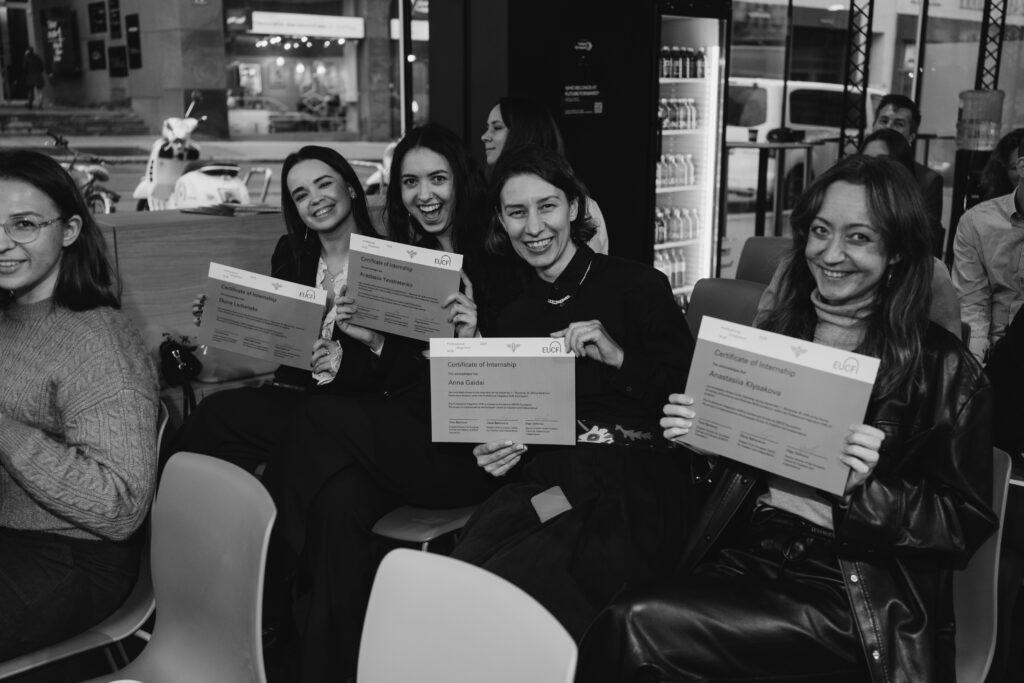
I am grateful to the HUB for giving me the opportunity to take my first professional step in an Austrian organization and for introducing me to a wonderful and supportive community of women professionals.
INTEGRATION IN AUSTRIA
I would rate my level of integration in Austria as 7 on a scale from 1 to 10.
For me, being integrated means having a stable job and income, being fluent in German, and having access to the job market, healthcare, and education. It also means understanding one’s rights and responsibilities, having personal agency, forming friendships with local residents, and understanding the main social and political processes of the country. Additionally, it involves being familiar with the culture and history, and feeling satisfied with one’s life in Austria.
Networking and building a community of friends are very important to me, and I make an effort to maintain both. I also attend events regularly and apply for jobs. Among these, I find networking and connecting with people to be the most effective for integration.
I was lucky to meet mostly friendly people here in Austria. I often hear from Austrians who already had contacts with Ukrainians, that they are intelligent, educated and hardworking.

PERSPECTIVE
How do I see my life after completing the program? After completing the program, my “must-do” list includes finding a job in my relevant professional field, maintaining contacts with the HUB participants and staying connected with my hosting organization and collaborating with them hopefully in the future.
On a scale from 1 to 10, how likely I am to return to Ukraine in the future, I would rate as 5. I would consider returning if there is safety, a good job opportunity, and quality education for my child.
REFLECTIONS
Commuting to my workplace in another city, about two hours in one direction, has been challenging, as well as communicating in German in professional settings.
For people living in smaller cities, like me, there is a lack of a professional community. It would be great to have regular online networking meetings, both with Ukrainian professionals and with local Austrian professionals.
My advice to those who are just beginning their professional path in Austria would be to strengthen German language skills and to find a supportive community.
If I were to describe the Professional Integration HUB in one sentence, I would say that it is a platform for a confident start in your profession with a motivation to move forward.
Photos: Valerie Loudon, Ganna Kasych