16 December 2025
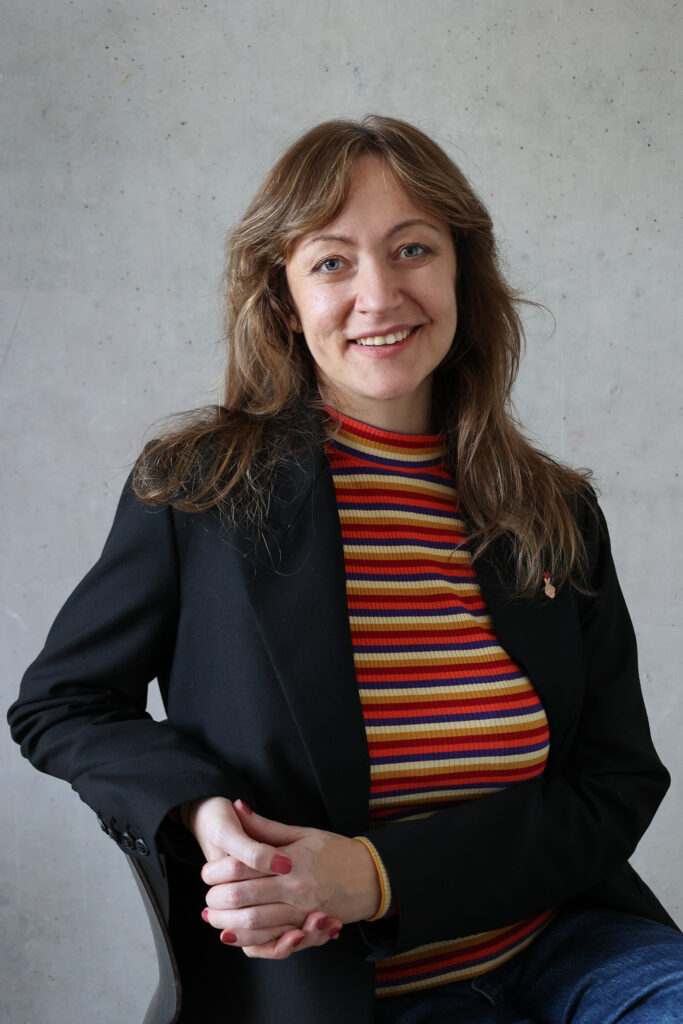
Anastasiia Klysakova: “One of my dreams is to return home to free Ukrainian Crimea someday and contribute to its recovery”
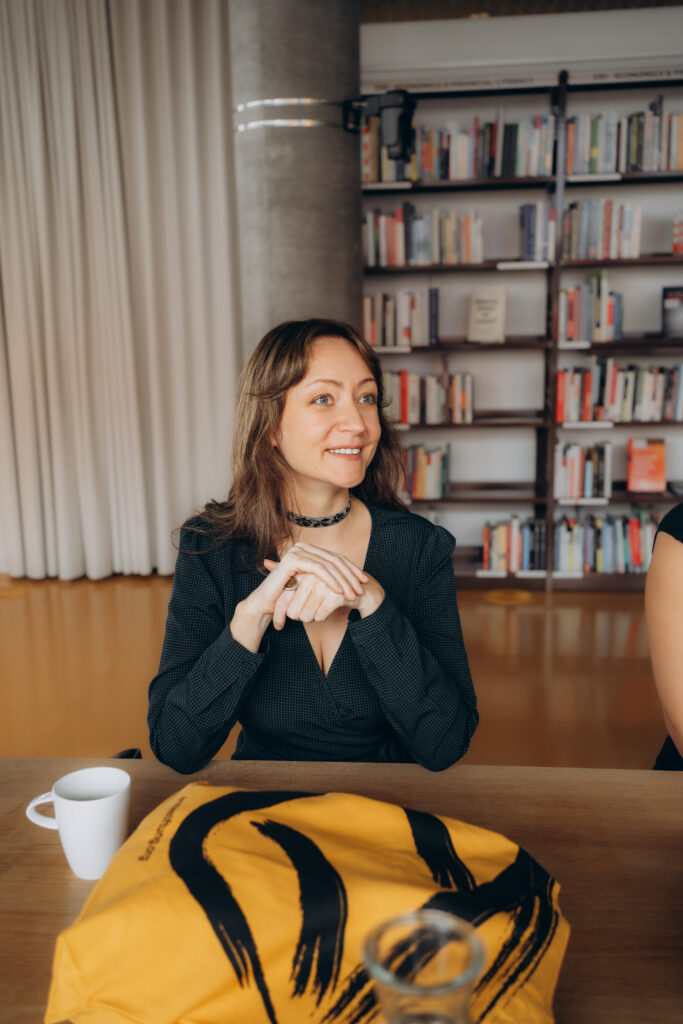
Anastasiia Klysakova, Professional Integration HUB 3.0 Program Participant.
Intro
- Age: 36 years old
- The city where you lived before moving to Austria: Kyiv
- Your professional specialization: Strategic communications expert and project manager
- Hosting organization: NGO Academy, WU Vienna
- Self-rated integration: 7/10
PROFESSIONAL BACKGROUND
I believe impact happens when strategy meets empathy. With 17+ years of experience leading national communication campaigns, international volunteer communities, and cross-sector partnerships, I help ideas grow into solutions that brings impact.
Over the past 5 years, for example, I’ve led project that connected primary school children and teachers with stroke-awareness lessons as part of FAST Heroes, a global educational campaign on stroke symptoms active across continents. Our team in Ukrane engaged 110 000 pupils into lessons about stroke symptoms: they learned skills to act in emergency.
I worked at senior role in communications agency that executed award-nominated integrated communication campaigns in health and education during wartime in Ukraine, and worked with donors such as USAID, UNICEF, and GIZ.
I worked as strategy and marketing expert both in-house and as solopreneur.
I have experience of launching my own market research agency Insights Lab having in my portfolio such clients as WWF and IREX Ukraine.
I also worked in business transformation consulting. Besides practical experience of organisational growth, I obtained MBA degree in Ukraine.
Alongside this, I bring over a decade of leadership and networking in international volunteer communities as ex-curator of the Global Shapers Kyiv Hub and ex-Communications Lead for AIESEC Ukraine.
Currently, while pursuing double studies in Vienna on Cross-Disciplinary Strategies in Arts and Psychology Counselling, I continue mentoring social and cultural innovators on strategy and marketing and collaborating on projects that aim to create lasting social change.
HOBBIES AND PERSONAL INTERESTS
The circle of my interests includes writing and performing poetry, arthouse and documentary cinema festivals, contemporary art, dancing, performance. I am interested in buddhism and meditation and already did 4 silent retreats each lasting 10 days – it is called ‘vipassana’.
At the heart of my interests lies a fascination with human, interest in self-reflection and personal growth, mindfulness, creativity and artistic expression.
A book that is special and meaningful to me is Walk Through Walls, A Memoir By Marina Abramovic.
I am fascinated by this artist resilience, talent, life journey, experiments with mind that find its artistic form and influenced humanity.

RELOCATION
I had lived and worked in Kyiv for 10 years when the full-scale war began. In the very first days, I decided to evacuate because of safety concerns. My home in Crimea had already been occupied in 2014, and when russian troops entered the Kyiv region my biggest fear was ending up under occupation again.
I left with the expectation that I would be absent for only a few weeks. I genuinely thought I would return by the end of March 2022. Instead, those 3 weeks turned into three years of living in Vienna.
Austria wasn’t even on my radar. On March 2, 2022, I first arrived in Germany, where I stayed with my school friend in Nuremberg for a week. Then another friend told me about a free room for Ukrainians in Vienna. At that time many Austrians were opening their homes and hearts to people fleeing the war.
I decided to come to Vienna just to meet the family offering the room. Their kindness helped me feel grounded in those first days, and I ended up staying with them. That was how my life in Austria truly began.
After arriving in Vienna in March 2022, the first step was obtaining the right to live and work in Austria. This meant spending many hours standing in long queues outside the Vienna International Center together with thousands Ukrainians. In parallel, I began looking for job opportunities because my workplace in Ukraine, like many organizations at the beginning of the war, had paused its activities. I had no choice but to find work in Austria.
Very quickly I realized that without German, even with legal access to the job market, it was extremely difficult to find anything related to my field in communications. I also had no understanding of how the Austrian job market functioned. So during those first months, I took on small freelance projects while trying to figure out my next steps. As soon as I could, I registered for German courses, which only became possible in July 2022.
Alongside job searching, I was volunteering. I initiated several film screenings to discuss the war, promote Ukrainian cinema, and fundraise for Ukraine. At first, I partnered with Global Shapers Vienna and Stadtkino, and later with Kriegsbilder, an initiative founded by students of the University of Applied Arts. Together, we organized screenings, discussions, and events with Ukrainian filmmakers. Being an informal ambassador of Ukrainian culture has become one of my ways of supporting Ukraine.
I also raised awareness by sharing my personal story. In May 2022, I gave a TEDx talk at TEDxDonauInsel titled “Let’s create a ‘vaccine’ against war!”. My interview became a part of the Wien Museum’s new exhibition at the museum’s reopening about people who arrived in Vienna and their reasons for relocating. A new Austrian friend even made a short documentary about my first weeks in Vienna, “First 8 Weeks After the Last 8 Years”.
So those first months were a mix of navigating bureaucracy, searching for work, volunteering, and speaking openly about Ukraine, trying to process everything while also contributing.
PROFESSIONAL PATH IN AUSTRIA
I started looking for a job already in March 2022. One of my first applications was for a Marketing Director position in a non-profit organization that required only English, which is quite rare for Austria. I even had an interview, but I didn’t get the job. Later I understood why: despite having the right experience, I asked for an unrealistically low salary. I didn’t yet know about Austria’s strong professional unions, the minimum wage regulations for each sector, or the fact that salaries are calculated as 14 payments per year. My approach must have been confusing for them.
Throughout spring 2022, I had very limited success: around 90% of vacancies required German, and I couldn’t even start language courses until I received my legal documents and attended a mandatory appointment at the Integration Fund. I eventually completed the A2 and B1 levels in 2022-2023.
In 2023, I returned to Kyiv for a while. Around the same time, I learned that I had been admitted to a Master’s program at the University of Applied Arts Vienna. So, I returned to Vienna again, but this time with study purpose, not because of forced displacement.
Over the past two years, I’ve had a student scholarship and a part-time job in Ukraine, so I didn’t apply for positions in Vienna. My program is in English, so I also didn’t continue advancing my German. Studying full-time and working remotely already took all of my focus and energy.
I have experience in several fields, but speaking specifically about communications: I haven’t worked in Austria in this area because fluent German is essential for communication roles. From what I’ve observed, Vienna heavily relies on printed materials — posters, city lights, and even printed ads placed in the house ‘mailboxesʼ. In Ukraine, communication is much more digitalized. Even when we combine online and offline elements, digital remains central, especially for urban audiences and younger generations.
I also worked in the education sector in Ukraine, and through my current internship — partly at the university and partly at NGO Academy, which organizes blended academic and non-academic programs for NGO leaders — I’ve had the chance to compare both systems. In Austria, there is noticeably stronger trust in academic education. Meanwhile, small non-formal organizations function similarly in both countries: small teams, multitasking, hands-on project work, and collaborative structures.
Based on what I see in Vienna’s large-scale communication campaigns, there is a strong demand for skilled vocational workers, the city advertises these professions extensively. There is also a clear need for young people in the police and military sectors. And with Austria’s aging population, the demand for care professionals continues to grow.
EXPERIENCE IN THE PROGRAM
I applied three times; and as you can see, the third time was successful. I like to joke that I simply didn’t leave the organizers much choice but to accept me 🙂
But seriously, each attempt taught me something about what I could improve. And I truly believe: if you know what you want, stay consistent and don’t give up.
Every time I applied, I genuinely believed I would be selected. Over time, however, I learned that each internship position in the Professional Integration HUB can receive up to 20 applications, and that many talented Ukrainian women are now building their careers in Austria.
Stories from Hub participants inspired me throughout these attempts, and now I’m happy to share my own experience. My life keeps proving to me that the right team and the right opportunity will find you if you remain open, persistent, and confident in your strengths.
My first day at WU (Vienna University of Economics and Business) was symbolically on September 1st. Even though the Austrian academic semester officially starts in October, I immediately felt: the summer is over.
The NGO Academy team welcomed me warmly. We had our first team lunch, and even tried speaking a little German together. I also went through all the security and IT procedures to receive my work laptop and office key. Austrian academic institutions take their security protocols very seriously, so it was a thorough process.
The most valuable insight I gained during the program is that you work not with organisations, you work with people, this is true both in Ukraine and in Austria. Meet people, talk to people, build win-win collaborations and meaningful connections.
My main achievement was completing an independent research project: an impact assessment of the Civil Society Leadership Programme for Ukraine. I came with strong experience in qualitative research and in-depth interviews from Ukraine, which was valuable for the team, but I had never conducted an impact evaluation of an educational program in an international academic setting before. I learned a lot from this process.
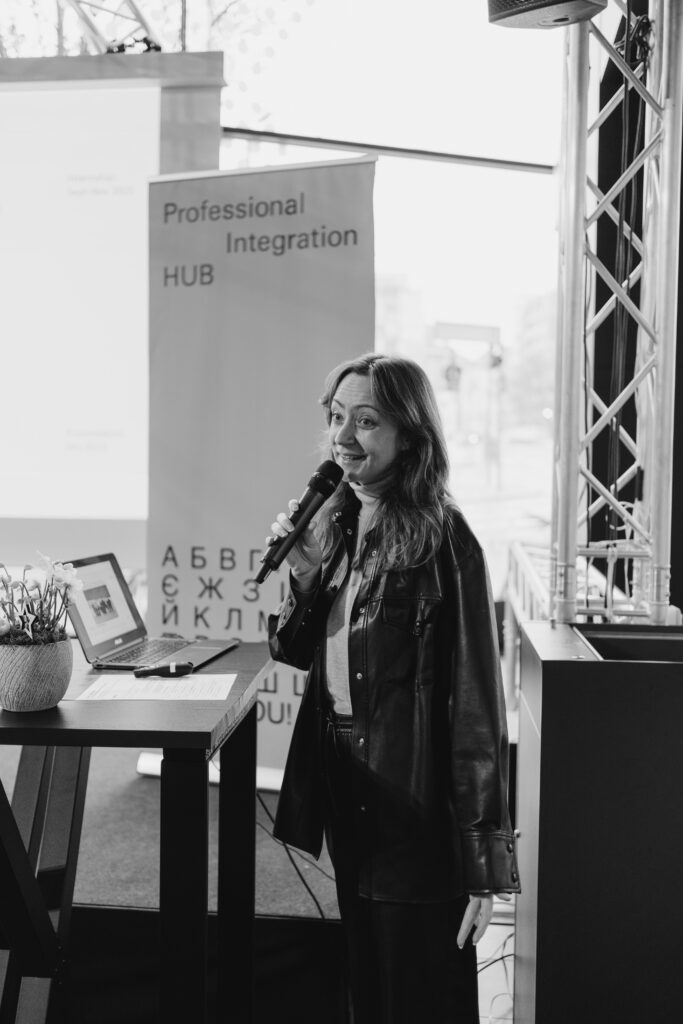
The internship also gave me insights into how different formal and non-formal educational formats function in Austria, an area that is one of my key personal and professional interests. Through the internship and the Study Tours of the Professional Integration HUB, I developed much clearer understanding of how Austrian organizations work.
An unexpected benefit was the professional network I built with Ukrainian NGO leaders who are part of NGO Academy programs for Ukraine. This community became a powerful resource.
I was fortunate to assist in organizing the second Civil Society Leadership Programme for Ukraine. Those two weeks were full of meaningful moments: the content of the program, the community of Ukrainian NGO leaders, and the feeling of contributing to civil society development in Ukraine while being in Austria.
One moment that stands out was when the participants presented a Ukrainian flag signed by NGO representatives to the NGO Academy team inside the Austrian Ministry of Foreign Affairs. It was deeply symbolic and emotional.
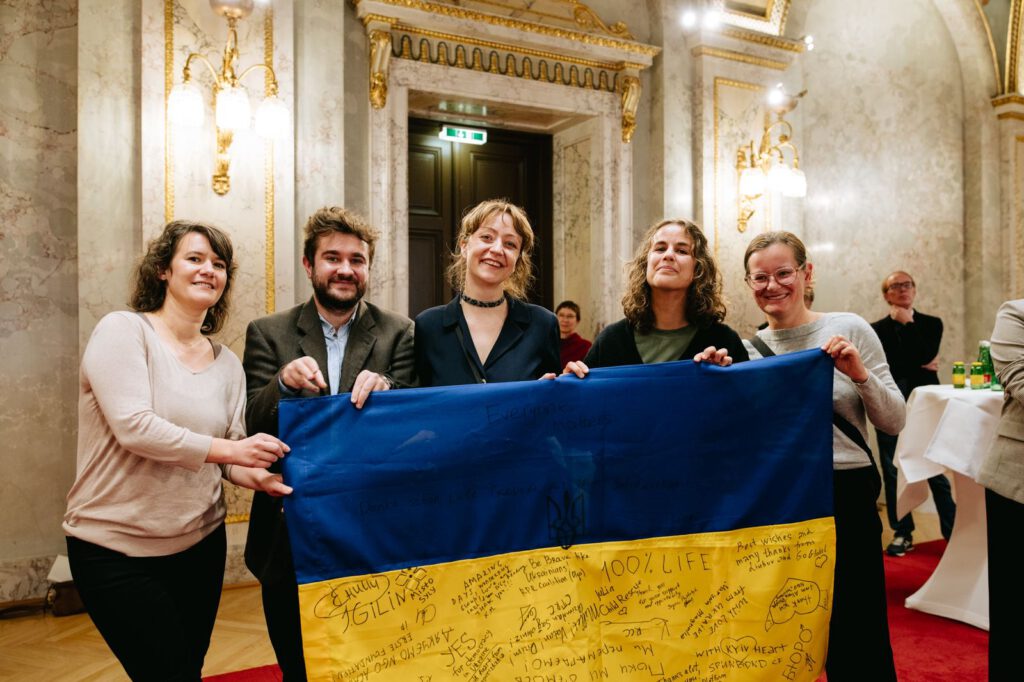
But truly, the entire three months of the program formed one unforgettable, impactful memory.
For me, the main value of the HUB is the opportunity to “go behind closed doors” and gain direct access to the Austrian job market through the internship itself, through Study Tours to diverse organizations, and even through German-speaking clubs where we met inspiring Austrian professionals.
The HUB opened networks, insights, and experiences that would have been difficult to access on my own.
INTEGRATION IN AUSTRIA
I would say my level of integration in Austria is 7 out of 10, and with B2-level German, I’d probably rate myself 8 out of 10.
Beyond language, I know a lot about Austrian history, culture, and daily life. I am completing my Master’s degree here, and thanks to the HUB program, I also have professional experience in Austria. My circle of friends includes not only Ukrainians but Austrians and other international colleagues as well.
For me, integration is about openness, curiosity, and respect toward the culture you live in, while also maintaining and expressing your own identity in a non-violent way. It includes following both formal and informal rules and at least making an effort to learn the language of the people who welcomed you.
Integration happens in daily life: talking to people, booking appointments at the doctor or bank, observing local culture, visiting galleries, reading newspapers, learning social norms, and even understanding local humor.
Professional integration requires more deliberate effort. Programs like the HUB were very effective for me, offering both theoretical knowledge and practical experience. In 2022, I participated in counselling through AMS (Austrian Job Service), which helped me translate my CV into German. At the time, however, it was difficult to apply for jobs because my German skills were limited, and most positions required German, so I continued to use my English CV.
I also joined the program “More Than One Perspective,” which provides mentorship and job fairs for refugees. Their initiatives are designed for people who already have some German proficiency, so they were more effective for longer-term residents than for Ukrainians arriving in 2022 with little to no German.
Through these experiences, I also became aware of discrimination against refugees from other countries. For example, Ukrainians have immediate access to the Austrian job market even without German, whereas people from Middle Eastern countries often face stricter legal and bureaucratic barriers. While this is not our fault, it highlighted areas where Austria could improve fairness and inclusion.
While I am answering these questions, the program is still ongoing, but having real working experience with Austrian colleagues has been one of the most powerful forms of integration for me. It gave me practical exposure to the Austrian job market and helped me build professional confidence and networks.
PERSPECTIVE
As for returning to Ukraine, I am certain — I would rate it 8 out of 10. I never intended to immigrate permanently from Ukraine, I moved only due to safety concerns.
That said, I can imagine working on global projects or cross-cultural initiatives for limited periods. It is also interesting to live in different cities while still remembering where your home is.
My knowledge of Austria could be useful for Austrian-Ukrainian projects, but ultimately, I want to live in Ukraine. One of my dreams is to return home to free Ukrainian Crimea someday and contribute to its recovery.
I’ve already decided to return to Ukraine after my internship ends, even though I have only warm feelings toward Austria, and Vienna is truly an amazing city.
I plan to reside in Western Ukraine for now, hoping it will be safer than Kyiv or other cities. If I feel secure, I want to stay, contribute to my country, and live among my people.
Of course, life can bring unexpected opportunities, such as meeting your love far away, but outside of truly uncontrollable circumstances, my goal is to live in Ukraine, especially during this historically challenging period.
My dream job involves managing a large-scale initiative that positively impacts many people’s lives in Ukraine. I am also interested in organizing cross-sector projects, collaborating with professionals from diverse disciplines, backgrounds, and cultures.
At some point, I might consider working in the government, but only when I have enough financial stability, because the salaries for Ukrainian civil servants are relatively low while the responsibilities are significant.
I am also drawn to social entrepreneurship as a mix of doing good and being independent, and, who knows, I could probably establish my own social enterprise in the future.
REFLECTIONS
I really missed English-speaking job fairs. Anyone who organizes one would fill a major gap for English-speaking professionals in Austria.
For anyone starting their professional path in Austria, I would recommend to learn German and expand your professional network — it’s crucial everywhere. Be entrepreneurial and persistent.
The Professional Integration HUB is the professional bridge between Austria and displaced Ukrainian professionals.
Photos: Valerie Loudon, Ganna Kasych, Igor Ripak